Introduction: The DINP market showed a trend of decline followed by rise in the fourth quarter. As of December 17, the average price in Jiangsu market was 7,422 yuan/ton delivered, down 9.57% month-on-month and down 20% year-on-year. The average profit was 623 yuan/ton, up 48% month-on-month.
DINP prices initially declined before rising.
As of December 17, the average price of DINP in Jiangsu Province in the fourth quarter was 7,422 yuan/ton delivered, down 9.57% quarter-on-quarter and down 20% year-on- year. The price peaked at 7,600 yuan/ton ex-factory and the low point was 7,150 yuan/ton ex-factory, with a fluctuation range of 5.96%.
Figure 1. Price trend chart of DOP and DINP (RMB/ton) Figure 2. Price trend of DINP and octanol (RMB/ton)
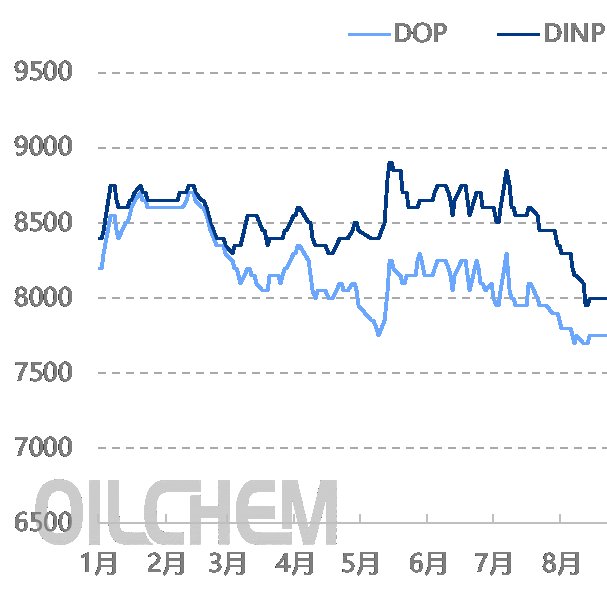
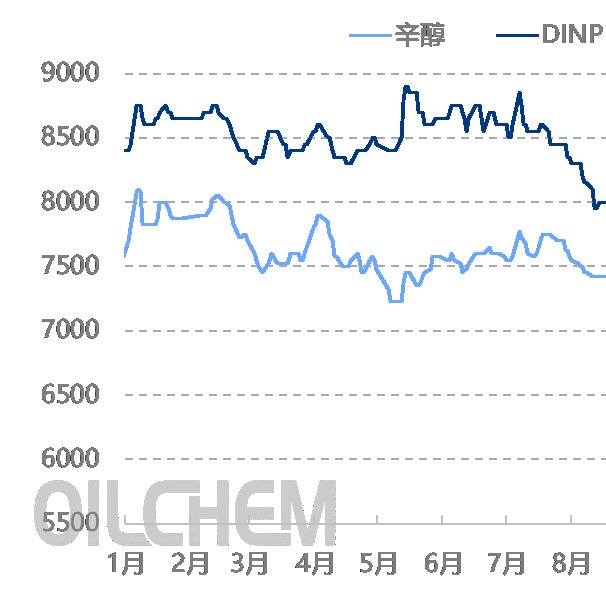
At the start of the fourth quarter, the octanol market faced inventory pressure and actively sold off its stock, frequently offering price concessions. This led to a decline in DINP market prices. Taking Jiangsu market as an example (the same applies below), at the end of October, prices fell to a quarterly low of 7,150 yuan/ton. At this low price, there were some transactions driven by immediate demand. Starting in November, more octanol plants reduced or stopped production, gradually tightening spot supply and causing prices to bottom out and rebound. DINP costs increased, and market prices followed suit, eventually reaching a high of 7,600 yuan/ton. The East China region has fewer DINP producers, giving prices some resilience. Therefore, even as octanol prices eased, DINP prices maintained their high level. The price difference between DINP and DOP widened to a maximum of 600 yuan/ton, and the price difference
between Jiangsu and South China gradually widened to around 300 yuan/ton. With market prices at high levels, buying interest gradually decreased.
DINP production to increase by year-end.
Figure 3. Changes in DINP production (tons) from October to December. Figure 4. DINP Profit Change Chart (tons)
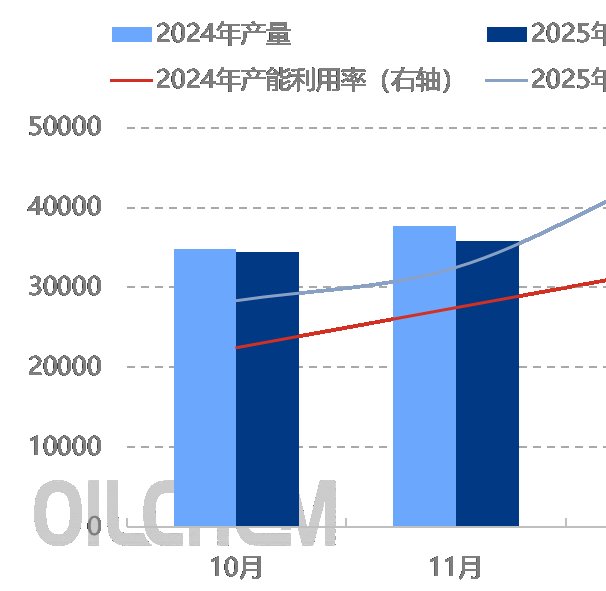
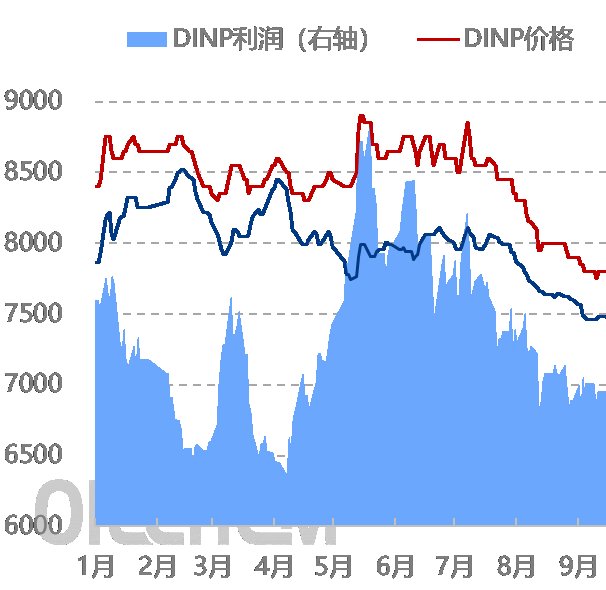
Octyl alcohol prices declined quarter-on-quarter in the fourth quarter, while phthalic anhydride prices continued to ease, resulting in good profit margins in the DINP market. The average profit in the fourth quarter was RMB 623/ton, an increase of 48% quarter-on-quarter. The high point was RMB 818/ton, and the low point was RMB 389/ton. This increased profitability is beneficial for December production, and overall DINP output is expected to increase slightly by the end of the year, with monthly output projected to exceed 40,000 tons. In the fourth quarter, cumulative DINP output is estimated at 114,200 tons, a year-on-year increase of 0.87%, with an average capacity utilization rate of 82%, a year-on-year increase of 9 percentage points. The market continues to have sufficient inventory.
DINP prices are under long-term pressure due to anticipated increased raw material production.
From a supply and demand perspective, the first quarter of next year will include the New Year holiday, during which some plants will have routine shutdown plans, and the quarterly output is expected to decline slightly. However, there will be a continuous supply of spot inventory available for sale in the market. Considering the holiday arrangements, merchants in the market will mainly focus on clearing inventory in January and February. Meanwhile, end users will have a long shutdown period in the first quarter due to the New Year holiday, and market consumption is expected to decline, with limited support from the demand side.
Looking at related products, there is an expectation of new production capacity coming online for the raw material isononol in the second quarter of next year, and an increase in the supply of DINP in East China. The impact of the increased supply may be released earlier than expected at the end of the first quarter, affecting market sentiment and thus affecting price movements. In addition, there is also an expectation of increased production capacity for octanol, and there are also inventory reduction operations before and after the holidays in the first quarter, which will lead to an expectation of lower raw material prices, which will also suppress DINP prices. In the long term, the DINP market is still on a downward trend, while in the short term, the decline in octanol is slow, and DINP is still on a narrow and slow easing trend.